Environmental control is one of the most influential variables in electrospinning, yet it is still underestimated in many development workflows. Temperature, absolute humidity, relative humidity, airflow, and solvent removal can all affect jet stability, solvent evaporation, fiber morphology, defects, and batch-to-batch reproducibility. The humidity, in particular, has a well-documented effect on fiber morphology, but that effect depends strongly on the polymer system, solvent volatility, and water miscibility.
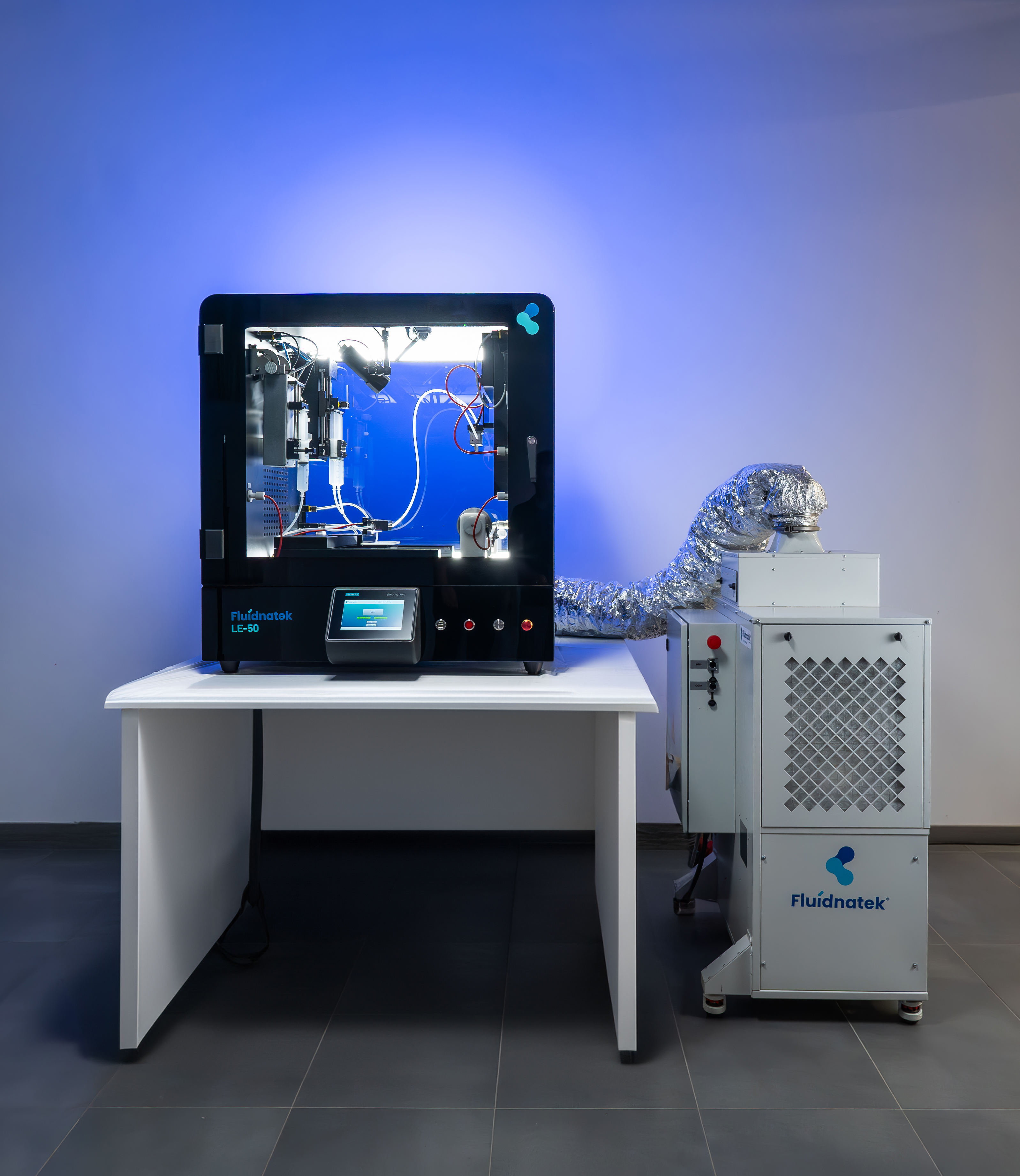
This is where the Fluidnatek Environmental Control Unit (ECU) becomes a key player: not as a generic climate accessory, but as a process-oriented solution specifically designed (not standard/commercial product) to support a particular evaporative process such as electrospinning under controlled and repeatable conditions. Fluidnatek describes its ECU as a unit that can heat-cool and/or dry-humidify the spinning chamber atmosphere, thus providing all degrees of freedom for environmental adjustment, allowing users to move across the viable climate space and reach process-specific temperature and humidity points.
Why Ambient Conditions Matter
All materials are sensitive to environmental conditions, and respond accordingly to such conditions, meaning their properties vary. Some materials are more sensitive than others to environmental changes, but all of them are to some extent.
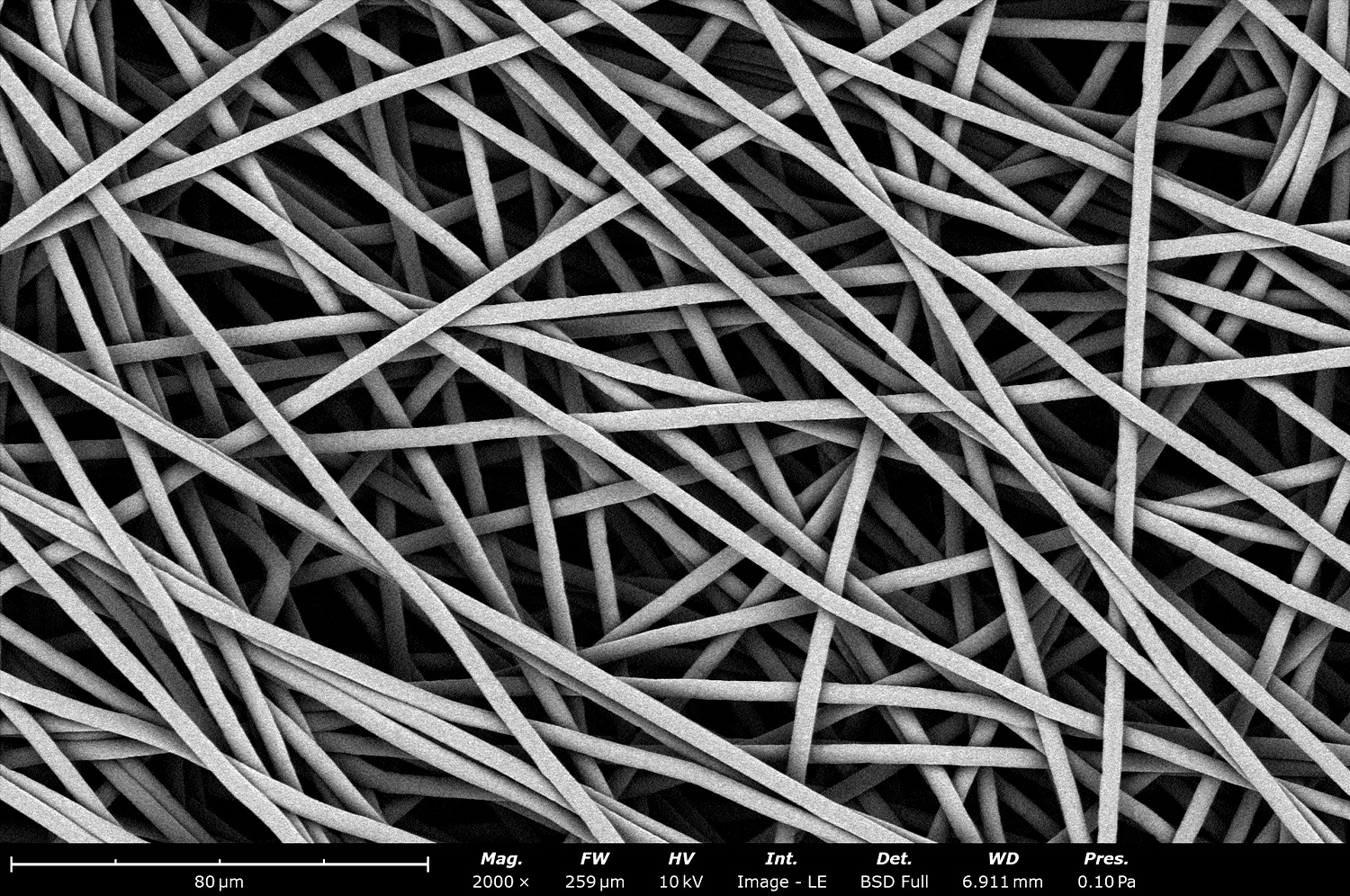
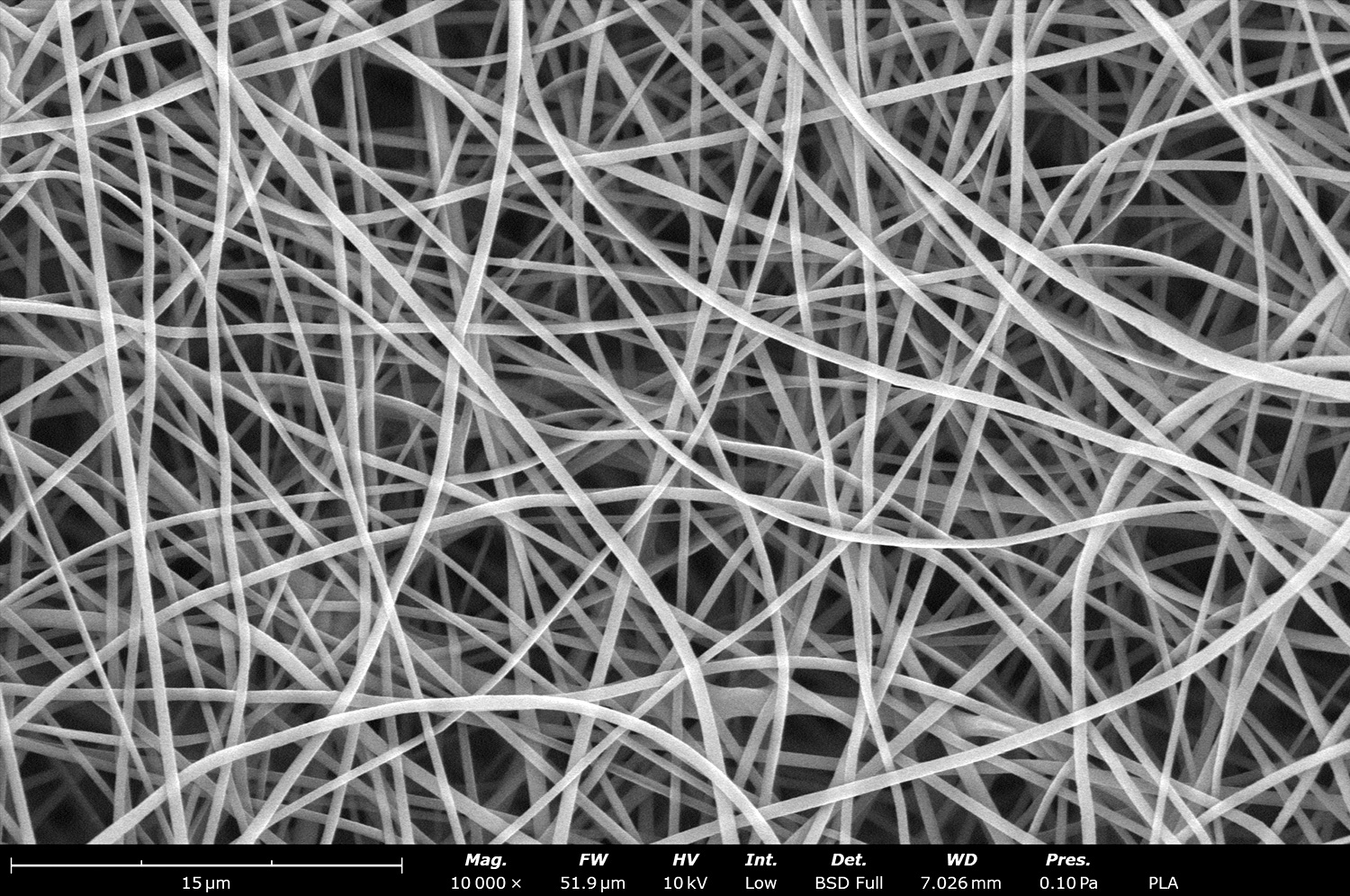
Electrospinning is in essence a drying process driven by electrostatic forces, thus it is highly sensitive to the surrounding environment because the process depends on a delicate balance between charge, conductivity, viscosity, evaporation rate, and jet stretching. Even when voltage, flow rate, and working distance remain unchanged, variations in ambient temperature or humidity can shift the final morphology of the electrospun fibers or electrosprayed particles (electrospraying), as well as other material properties or characteristics may change: possible defects, porosity, amount of residual solvent, mechanical strength, etc.
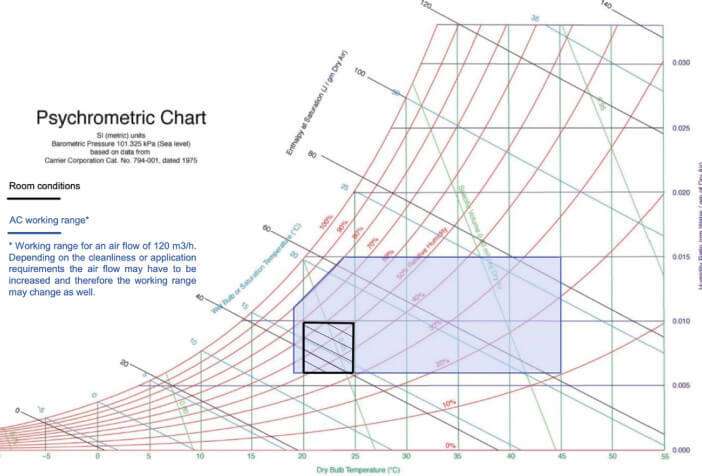
First of all, it's important to understand that temperature (T) and relative humidity (RH) are correlated, interdependent variables: you cannot achieve whichever setpoint of T/RH in the spinning chamber, since all climate control units have a physical limit, and there are environmental setpoints hardly achievable. This is what a good psychrometric diagram shows up: the climatic space that an environmental control unit is able to achieve in the spinning chamber and the operator can move throughout, and under what room environmental conditions (the climate conditions in your lab or facility). This is probably something nobody is explaining you clearly and in detail.
Second, the absolute humidity matters. For a determined temperature, the higher the value of absolute humidity is, the higher (or much higher) will be the relative humidity as well. This fact can even make the room environmental conditions remain outside the psychrometric diagram, changing completely the scenario.
Third, in electrospinning and electrospraying, you don't need only to keep (very) stable temperature and relative humidity: you must be able to adjust both variables, in order to meet the optimum environment in the spinning chamber for a specific solution.
Fourth, many people believe it's only about reducing moisture in the spinning chamber, meaning decreasing the relative humidity. But depending on the process, as well as on the room environmental conditions, your process may require cooling (reducing temperature) and/or humidifying (adding moisture), e.g. in exceptional dry days during winter or summer, depending on your region. But your ability to run your electrospinning process under optimum conditions every time cannot depend on the environmental conditions of the day, whichever they are!
The above being clarified, let's go now to relative humidity (RH) and temperature (T) a bit more:
Relative humidity (RH) is especially important. In some systems, higher RH can promote pore formation or surface defects, while lower RH can accelerate solidification and increase the risk of brittle fibers or clogging. In a 2013 study, low RH below 50% caused fiber breakage across PEG, PCL, and PCU systems, while higher RH produced polymer-dependent effects such as pore formation or morphology loss. That is exactly why environmental control must be adjustable rather than fixed, being able to both dry and humidify.'
Temperature (T) also matters because it changes solution viscosity and solvent evaporation behavior at the same time. In a study on electrospun polymer nanofibers, higher temperature reduced viscosity and surface tension while increasing evaporation rate, which produced a measurable, non-linear effect on fiber diameter and jet dynamics. In practice, this means that a small shift in chamber conditions can have a visible effect on fiber diameter and uniformity.
Moreover, the deviation of the environmental values reached in the spinning chamber with respect the optimum climatic setpoint desired must be really low actually (narrow deviation): even a slight deviation in relative humidity may substantially affect the outcome, especially when using materials more sensitive and reactive to humidity changes.
What Makes the ECU Different
The Fluidnatek Environmental Control Unit - ECU is designed specifically for electrospinning and electrospraying, which is an important distinction. Generic climate-control systems are not built around the evaporation dynamics, airflow needs, and solvent-handling requirements of electrospinning chambers.
The ECU provides bidirectional thermal and humidity control, allowing users to heat or cool the spinning chamber and to humidify or dehumidify it as needed. That flexibility matters because electrospinning processes do not all fail in the same direction: some need drier conditions, others require tighter humidity management, and many require both depending on the formulation and the ambient room conditions.
The Fluidnatek ECU also integrates HEPA filtration at the electrospinning equipment air-intake path, which provides ultra-clean environment in the chamber during processing. For determined applications such as biomedical, pharmaceutical, and other contamination-sensitive applications, that matters because chamber cleanliness and vapor handling are part of process stability, not just facility comfort.
Reproducibility and Process Transfer
One of the main reasons environmental control matters is reproducibility. A process that works once but cannot be repeated under different ambient conditions is not yet a robust process. Studies on humidity and temperature consistently show that environmental drift can change fiber morphology enough to affect experimental conclusions.
Industry requires batch-to-batch consistency, repeatability, and system-to-system matching (e.g. a fleet with multiple pieces of equipment).
That is why the ECU is especially useful in research and development, where users need stable conditions to compare formulations, optimize recipes, and isolate the effect of process variables. It is also relevant during scale-up, when longer runs make the process more vulnerable to ambient drift. And of course it's a must in manufacturing environments.
Therefore, for teams developing electrospun materials for future manufacturing, this kind of control helps to reduce uncertainty early in the workflow. Instead of treating the environment as background noise, it becomes a controlled parameter that can be documented, adjusted, and transferred.
Where the Environmental Control Unit (ECU) Adds Value
The Fluidnatek ECU is particularly useful in situations where:
- The polymer or solvent system is particularly sensitive to humidity or temperature.
- The process requires repeatable fiber morphology (consistency every time).
- Chamber conditions need to be stable across long runs (long term stability).
- Demanding applications such as biomedical or pharmaceutical, and other products/applications subject to strict requirements, standards or regulations.
- The process needs to be transferred from research to production with fewer changes, in a consistent manner.
In practice, this makes the ECU especially relevant for researchers working on hygroscopic polymers, protein-based systems, drug-loaded formulations, and other materials where environmental drift can affect the final outcome.
Why This Matters for Scale-Up
Scale-up in electrospinning is not only a question of throughput. It is also a question of whether the same process can be reproduced under different operating conditions and over longer periods of time. A controlled spinning chamber helps reducing one of the most common sources of variability during scale-up: uncontrolled temperature and humidity.
When the environment in the spinning chamber is stable, showing very low deviations with respect the optimum setpoint required for temperature and humidity, the process becomes much easier to document, compare, and transfer. That is where Fluidnatek's approach stands out: the ECU is not presented as a standalone accessory, but as part of a broader electrospinning workflow in which environmental control, process monitoring, advanced data collection for data-driven decisions, and reproducibility are interconnected. In other words, the Fluidnatek's ECU is part of a broader strategy to achieve batch-to-batch consistency, repeatability and system-to-system matching.
Conclusion
Environmental control in electrospinning is not a secondary feature or merely "nice-to-have". It is part of the process itself. If the goal is to generate consistent fibers with defined morphology and reliable performance, obtaining good homogeneity and uniformity of the electrospun materials produced, then the spinning chamber environmental conditions must be controlled with the same rigor as electrical and flow parameters, meaning a great long term stability and narrow deviation of both temperature and humidity with respect the optimum environmental setpoint needed.
The Fluidnatek Environmental Control Unit fits into that logic by providing process-specific environmental control for electrospinning and electrospraying. Its value is not simply that it regulates temperature and humidity, but that it does so in a way that supports reproducibility, scale-up, and cleaner process development.
Published date: 13 July 2026
▼ Reference
-
Nezarati, R. M., Eifert, M. B., & Cosgriff-Hernandez, E. Effects of Humidity and Solution Viscosity on Electrospun Fiber Morphology. Tissue Engineering Part C: Methods 19(10):810-819 (2013).
-
Yang, G.-Z., Li, H.-P., Yang, J.-H., Wan, J., & Yu, D.-G. Influence of Working Temperature on the Formation of Electrospun Polymer Nanofibers. Nanoscale Research Letters 12:55 (2017).
-
The impact of relative humidity on electrospun polymer fibers: From structural changes to fiber morphology. Progress in Polymer Science / review page.
-
Fluidnatek. Environmental Control Unit (ECU) / Electrospinning Environmental Control. Product documentation and product page.
▲ Close list
 ElectrospinTech